CADR for a 1,500 sq ft room
Quick answer
A 1,500 square foot room with an eight foot ceiling holds 12,000 cubic feet of air. It needs about 900 CFM of clean air delivery rate to reach four and a half air changes an hour, which is the range usually suggested where somebody in the house has allergies, 400 CFM for two changes an hour, and 1200 CFM for smoke season at six. AHAM's two thirds convention gives 1000 CFM for this room, which is the same arithmetic with an eight foot ceiling and five air changes an hour already filled in.
CADR figures come from the ANSI/AHAM AC-1 test method. The air change targets are guidance, not a standard.
| Target | Air changes an hour | Required CADR | Time to remove 90 percent |
|---|---|---|---|
| General air quality | 2 | 400 CFM | 69 min |
| Allergy households | 4.5 | 900 CFM | 31 min |
| Five changes, the two thirds convention | 5 | 1000 CFM | 28 min |
| Smoke and wildfire season | 6 | 1200 CFM | 23 min |
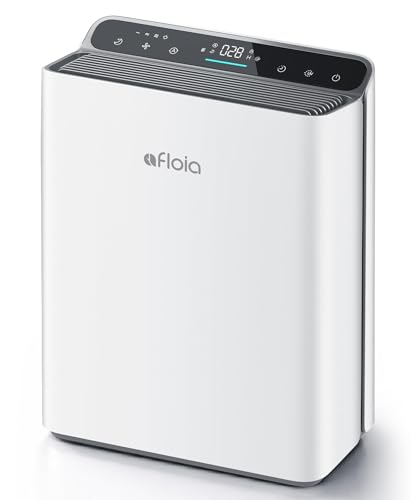
Afloia Air Purifier for Large Rooms Up to 2,000 Sq. Ft. with PM2.5 Display
This machine can be credited with about 1333 CFM, derived from the listing's own figures: 2000 sq ft at 5 air changes an hour, assuming an eight foot ceiling. That clears the 900 CFM this room needs for four and a half air changes an hour.
Coverage claims vary in what air change rate they assume, so compare a published airflow figure rather than the room size on the box.
| Ceiling | Volume | CADR at 2 ACH | CADR at 4.5 ACH | CADR at 6 ACH |
|---|---|---|---|---|
| 7 ft | 10,500 cu ft | 350 CFM | 788 CFM | 1050 CFM |
| 8 ft | 12,000 cu ft | 400 CFM | 900 CFM | 1200 CFM |
| 9 ft | 13,500 cu ft | 450 CFM | 1013 CFM | 1350 CFM |
| 10 ft | 15,000 cu ft | 500 CFM | 1125 CFM | 1500 CFM |
| 12 ft | 18,000 cu ft | 600 CFM | 1350 CFM | 1800 CFM |
| If a listing says it covers | At this rate | That implies an airflow of |
|---|---|---|
| 1,500 sq ft | 1 air change an hour | 200 CFM |
| 1,500 sq ft | 2 air changes an hour | 400 CFM |
| 1,500 sq ft | 4 air changes an hour | 800 CFM |
| 1,500 sq ft | 5 air changes an hour | 1000 CFM |
How much airflow does a 1,500 sq ft room need?
The arithmetic is one line. Required CADR in cubic feet per minute equals floor area times ceiling height times the air changes you want, divided by sixty. For 1,500 square feet at eight feet, four and a half changes an hour works out at 1,500 x 8 x 4.5 / 60, or 900 CFM.
Nothing in that line is a rule of thumb. It is unit conversion: cubic feet of room, divided into minutes. The only judgement is the air change target, and that is where guidance rather than measurement comes in.
Why the two thirds rule gives the same number
AHAM publishes a shopper's convention: look for a smoke CADR of at least two thirds of the room's floor area. For this room that is 1000 CFM. It is not a separate recommendation, it is this same calculation with two values already chosen for you, an eight foot ceiling and five air changes an hour, because 8 x 5 / 60 works out at 0.667.
That matters in two directions. If your ceiling is higher than eight feet, the convention quietly undersizes: at a ten foot ceiling this room needs 1250 CFM for the same five changes, not 1000. And if two changes an hour is genuinely enough for your situation, the convention oversizes by more than half.
Reading a coverage claim for a room this size
A listing that says it covers 1,500 square feet has told you almost nothing on its own, because the number depends entirely on the air change rate the manufacturer chose. The same machine is honestly described as covering a large room at one change an hour and a much smaller one at five.
Where a listing states both the area and the rate, the airflow follows by arithmetic and you can compare machines properly. Where it states only an area, the useful move is to treat it as a ceiling rather than a specification, and to look for a published CADR instead.
How long it takes to clear the air
Particle removal in a well mixed room is exponential decay, not a countdown. At 900 CFM in this room the machine delivers four and a half air changes an hour, which removes ninety percent of what is airborne in about 31 minutes and ninety nine percent in about 61 minutes.
That assumes the machine is the only removal path and that nothing new is arriving. During cooking or on a smoke day both assumptions fail, which is the real argument for sizing above the comfort target rather than at it.
When one machine is not the answer
If the required airflow is higher than anything a single unit publishes, two smaller machines in different parts of the room beat one that cannot do the job. Two units also mix the room better, because a single unit in a corner recirculates its own clean air and leaves the far side of the room largely alone.
The other honest answer is to make the room smaller. A door closed during the hours you care about, usually while sleeping, cuts the volume the machine has to serve and does it for free.
Machines with the largest published coverage
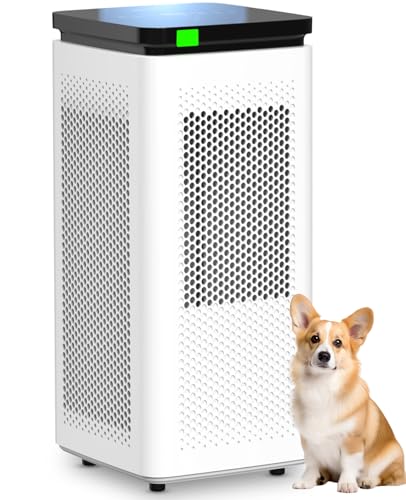
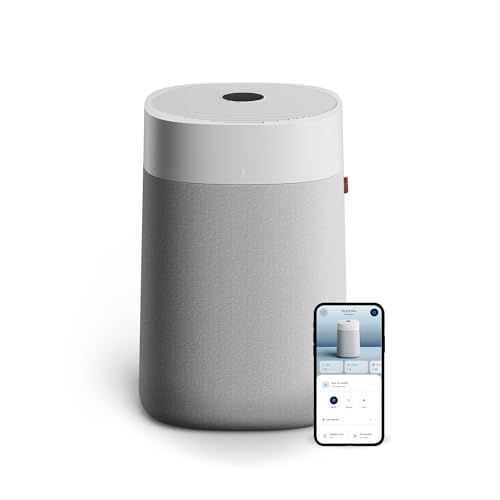
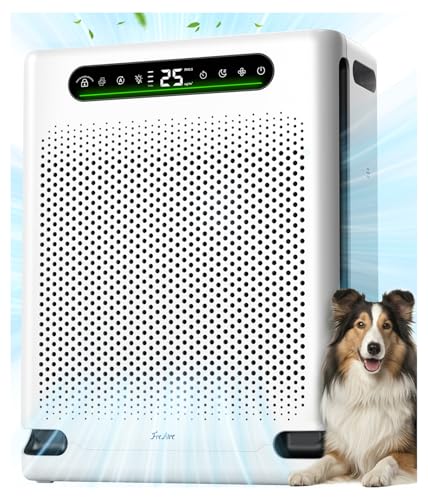
None of these state an air change rate behind their coverage claim, so they are sorted by claimed area rather than by an airflow we can verify.
- SIESEAN
Air Purifiers for Home Large Room Up to 4200 Ft2, 289 CADR, 20dB Sleep Mode
- particle sensor
- auto mode
$279.99 Check pricePrices change often - SIESEAN
Hepa Air Purifiers for Home up to 3500 Ft2, 235 CADR, 30dB Quiet Operation
- HEPA claimed
- carbon stage
- auto mode
$229.99 Check pricePrices change often - BLUEAIR
BLUEAIR Air Purifiers for Home Large Room up to 3,235 Ft2, Blue 211i Max
- particle sensor
$349.00 Check pricePrices change often - Levoit
Levoit Smart Air Purifiers for Home Large Room up to 2933 Ft2, Core 600S-P
- auto mode
$259.99 Check pricePrices change often - Levoit
Levoit Smart Air Purifiers for Home Large Room up to 2933 Ft2, Core 600S-P
- auto mode
$299.99 Check pricePrices change often - FreAire
FreAire Air Purifiers for Home Large Room Up to 2600 Ft2, HAP605, White
- washable pre-filter
- particle sensor
- auto mode
$89.99 Check pricePrices change often



Common questions
What size air purifier do I need for a 1,500 square foot room?
About 900 CFM of clean air delivery rate for four and a half air changes an hour, or 400 CFM if two changes an hour is enough for your situation. The figure comes from floor area times ceiling height times air changes divided by sixty. With an eight foot ceiling this room holds 12,000 cubic feet, so the machine has to move that volume through a filter four and a half times each hour.
Is CADR the same as CFM?
They share a unit but they are not the same claim. CFM is how much air a fan moves. CADR is how much of that air comes out genuinely cleaned, measured under the ANSI/AHAM AC-1 test method in a sealed chamber. A machine can move plenty of air through a poor filter and post a high fan rating with a much lower CADR, which is why the tested figure is the one worth comparing.
Why does a purifier have three CADR numbers?
Because AHAM AC-1 measures three particle sizes separately: smoke, dust and pollen. Smoke is the smallest and usually produces the lowest number, so it is the one to compare when smoke is the reason you are buying. A single headline figure with no particle named is usually the highest of the three.
Does the ceiling height really change the answer?
Yes, proportionally. The calculation is about volume, not floor area, and the floor area only stands in for volume when the ceiling is the assumed eight feet. This room needs 900 CFM at eight feet and 1125 CFM at ten for the same four and a half changes an hour, which is a difference big enough to change which machine you buy.
What if the room opens into a hallway?
Then the machine is serving a larger volume than the floor plan says, and it will fall short of the rate you calculated. Either size for the connected volume, close the door during the hours that matter, or accept a lower effective air change rate and know that is what you have chosen.