Musty smells and mold: why filtration is not the fix
Quick answer
A musty smell means active mold growth somewhere in the space, and mold growth is a moisture problem before it is an air quality problem; keeping relative humidity under 60 percent, ideally in the 30 to 50 percent band, matters more than any purifier. A mid-size unit like a 35 pint dehumidifier rated for 3,000 sq ft, around $209.99, is usually the right first purchase in a damp basement, not an air purifier.

Midea 35 Pint Dehumidifier for Basement, 3,000 Sq. Ft, Energy star
This is an Energy Star rated 35 pint compressor dehumidifier covering up to 3,000 sq ft, sized for the kind of basement or crawl space where musty smells usually start. Pulling relative humidity down out of the range mold needs to keep growing addresses the cause; a purifier addresses only the smell and spores already in the air.
Coverage claims vary in what air change rate they assume, so check a published airflow figure against your own room rather than the room size on the box.
| Relative humidity | What it means for mold |
|---|---|
| Below 30% | Too dry for mold, but this range brings its own problems, like dry skin and static |
| 30% to 50% | The target band for most homes; mold growth is unlikely to be sustained here |
| 50% to 60% | Elevated risk in humid climates or poorly ventilated rooms, worth monitoring closely |
| Above 60% | Actively supports mold growth and dust mites; the source of moisture needs attention |
What is actually causing a musty smell?
A musty smell is produced by microbial volatile organic compounds, gases mold and mildew release as part of their own growth process. Smelling must almost always means mold is actively growing somewhere in the space, whether visible or hidden inside a wall cavity, under flooring or behind an appliance, because the smell is a direct by-product of that growth rather than a lingering residue from something already gone.
This is why chasing the smell with air freshener or a purifier alone rarely resolves it: the source keeps producing new compounds as long as the moisture and mold are still there, and a purifier running in the same room only ever addresses what has already become airborne, not the growth generating it.
Does an air purifier actually fix a mold problem?
No. Filtration reduces the measured concentration of airborne mold spores and captures some of the odor-causing gases if the unit has a real activated carbon stage, but it does nothing to the mold colony itself or the moisture feeding it. Running a purifier in a musty room is treating a symptom while the underlying growth continues unaffected in whatever wall cavity, crawl space or bathroom corner it started in.
This distinction matters because it changes where the money should go first. A purifier bought before the moisture problem is fixed is money spent on ongoing symptom management for a problem that keeps generating new symptoms indefinitely.
Why does relative humidity under 60 percent matter more than filtration?
Indoor relative humidity belongs between 30 and 50 percent for most homes. Above 60 percent, the air holds enough moisture to support sustained mold growth on organic surfaces like drywall paper, wood framing and fabric, which is why mold problems concentrate in basements, crawl spaces, bathrooms and any room with a history of humidity above that threshold. Getting relative humidity reliably under 60 percent, and ideally into the 30 to 50 percent band, removes the condition mold needs to keep growing.
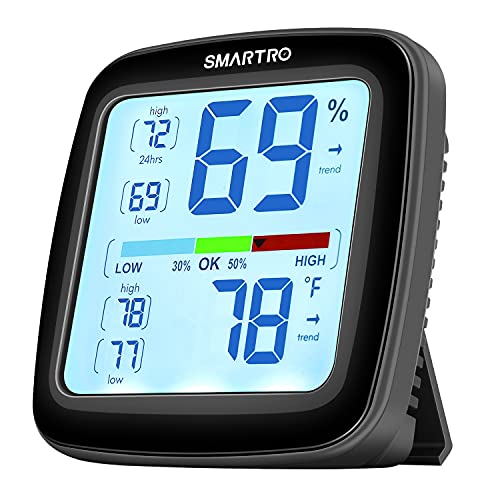
A hygrometer is the cheap first purchase that tells a homeowner which side of that threshold a given room actually sits on before buying anything larger; guessing at humidity by feel is unreliable, especially in a basement that feels cool rather than obviously damp.
How does a dehumidifier actually get a room under 60 percent?
A dehumidifier pulls moisture out of the air directly by condensing it onto a cold coil and collecting it in a tank or draining it through a hose, which lowers relative humidity at the source rather than filtering anything. Sizing depends on both square footage and how damp the space already is; a persistently wet basement needs more pulling capacity than a moderately humid bedroom of the same size.
A unit needs to run consistently, not occasionally, to hold a room in the target band, since humidity drifts back up as soon as the source of moisture, whether a leak, poor ventilation or simple ground moisture through a slab, resumes adding water to the air.
Where does a purifier fit once the moisture problem is under control?
Once relative humidity is reliably under 60 percent and any visible mold has been physically removed and the surface treated, a purifier with true HEPA and a real activated carbon stage is a reasonable addition for reducing residual spores and lingering must odor while the space fully dries out and off-gasses. It is a cleanup tool at that stage, not a substitute for the moisture fix that had to happen first.
What else has to happen besides buying a dehumidifier?
The actual water source needs to be found and fixed: a leaking pipe, poor grading directing rainwater toward the foundation, a bathroom exhaust fan that vents into an attic instead of outside, or a crawl space without a vapor barrier over bare soil. A dehumidifier manages humidity in the meantime, but as long as the source keeps adding moisture, the dehumidifier is running against a constant supply rather than solving the problem outright.
Equipment mentioned on this page
- TempPro
TempPro TP50 Digital Hygrometer Indoor Thermometer Room Thermometer
$12.99 Check pricePrices change often - Govee
Govee Indoor Hygrometer Thermometer H5075 with Bluetooth App Control
- app or voice
$12.99 Check pricePrices change often - SMARTRO
SMARTRO SC42 Professional Digital Hygrometer Indoor Room Thermometer
$18.99 Check pricePrices change often



Worth knowing before you buy
Common questions
Can an air purifier remove mold spores from the air?
A true HEPA purifier reduces the measured concentration of airborne mold spores while it runs, in the same way it reduces any other airborne particle of that size. It does not remove mold growing on surfaces and does not stop new spores from being released as long as the growth continues, so it manages symptoms rather than resolving the underlying problem.
What humidity level actually stops mold from growing?
Keeping relative humidity under 60 percent removes the condition most household mold needs to keep growing, and the 30 to 50 percent band is the broader target for overall indoor comfort and moisture control. Humidity above 60 percent, especially sustained over days or weeks, is when mold risk becomes significant in most home environments.
Should a purifier or a dehumidifier be bought first for a musty basement?
A dehumidifier, and usually a hygrometer before either, since the musty smell is a moisture-driven problem at its source. A purifier addresses only the airborne symptom and does nothing about the humidity level that is letting mold keep growing, so buying it first spends money before the actual cause has been measured or addressed.
Does opening windows help with a musty basement smell?
It depends on outdoor humidity. Opening windows in a humid climate or during a humid stretch can add moisture to a basement rather than remove it, making the problem worse. A dehumidifier or mechanical ventilation that actually controls moisture is more reliable than opening windows, which only helps when outdoor air is drier than indoor air.
Do dehumidifier pint ratings mean the same thing they used to?
No. Dehumidifier pint ratings changed with the 2019 DOE test conditions, and the same physical machine that used to be sold as 70 pints is now commonly labeled around 50 pints under the newer standard. Comparing an older capacity chart against a current label without accounting for that change leads to buying a unit that is smaller than intended.
How long does it take a dehumidifier to bring a damp basement under 60 percent humidity?
It depends on the size of the space, how damp it already is, and whether the moisture source is still actively adding water. A correctly sized unit running continuously typically brings a moderately damp basement into the target range within a day or two, but a basement with an active leak or standing water needs that source fixed before humidity will hold steady in the target band.