Pet dander and air purifiers: what actually gets filtered
Quick answer
Only the airborne fraction of pet dander is what a purifier can reduce; the fur and settled particles on floors and furniture need vacuuming and washing. The Coway AP-1512HH pairs a washable pre-filter with true HEPA and is rated for 1,748 sq ft, which covers most single rooms at a strong air change rate.
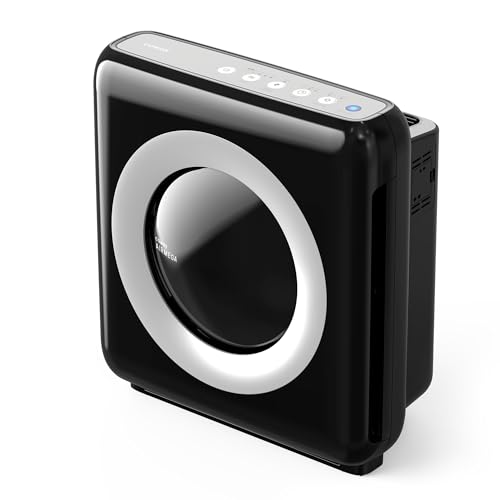
COWAY Air Purifier for Home Up to 1,748ft2, HEPA Filter for Smoke, Allergies, Pet Dander, Odor, Air Quality Monitor, Auto&Eco Mode, Timer, Filter Indicator, 3yr Warranty, Mighty AP-1512HH, Black
Cat and dog hair loads a filter fast, and the AP-1512HH puts a washable pre-filter ahead of the true HEPA stage so the fine media is not catching bulk fur, just the airborne dander and skin flakes it was designed for. Auto mode also ramps the fan when its sensor detects a spike, which matters right after a dog shakes off or a cat gets brushed.
Coverage claims vary in what air change rate they assume, so check a published airflow figure against your own room rather than the room size on the box.
| Where it is | What removes it | How fast |
|---|---|---|
| Airborne, floating in the room | True HEPA purifier CADR | Continuous while the unit runs |
| Settled on floors and rugs | Vacuum with a sealed HEPA filter | Only when vacuumed |
| On fabric, bedding, upholstery | Washing at the fabric’s hot-water setting | Only when washed |
| On the pet itself | Regular brushing outside or over an easy-clean surface | Only when groomed |
What actually is pet dander as an air quality problem?
Pet dander is the collection of tiny skin flakes, dried saliva residue and fine hair fragments that cats and dogs shed continuously. Most of it is small enough to stay suspended in room air for extended periods rather than settling quickly, which is what separates dander from the visible fur that ends up on the couch. That airborne fraction is the part a purifier is built to reduce; the fur, hairballs and larger debris that settle onto floors and furniture are a housekeeping problem, not a filtration one.
This matters for expectations: a purifier running in a room with pets will measurably lower the airborne particle count, but it does nothing about the fur already on the rug or the dander already worked into upholstery fibers. Both problems are real, and they need two different responses.
How much does a true HEPA purifier actually reduce airborne dander?
A true HEPA filter, tested to capture at least 99.97 percent of particles at its most penetrating size, removes dander at a rate governed by the unit’s CADR and the room’s air changes an hour, the same arithmetic that governs any other airborne particle. Required CADR in CFM is floor area times ceiling height times air changes an hour, divided by sixty; a pet household benefits from sizing toward the higher end of the four to five air change guidance rather than the low end, since dander generation is more continuous than most other indoor particle sources.
The AP-1512HH’s 1,748 sq ft rating at its top fan speed gives real headroom in a typical bedroom or living room, meaning it can be run on a quieter, lower speed most of the time and still clear the air faster than a marginally sized unit running flat out.
Why does a washable pre-filter matter specifically for pet owners?
A washable pre-filter is a coarse mesh stage in front of the true HEPA media, and its job is to catch the bulk fur and larger hair clumps before they ever reach the fine filter. Without one, hair mats across the face of the HEPA filter and can shorten its usable life well below the replacement interval printed on the box, since HEPA media is rated by total particle load, not by a fixed number of months.
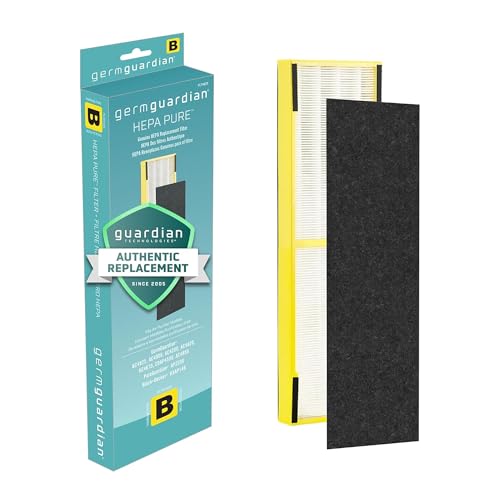
Rinsing or vacuuming the pre-filter every couple of weeks in a multi-pet household keeps airflow through the unit consistent and protects the investment in the HEPA stage, which on the AP-1512HH runs about $23.99 to replace as a set when it is finally due.
Does a purifier deal with pet odor as well as dander?
Dander is a particulate problem; odor is mostly a gas-phase problem, and HEPA media does not touch gases at all. A unit with an activated carbon layer helps with litter box smell or general pet odor because carbon adsorbs odor-causing molecules by mass, and a thin carbon layer saturates and stops working sooner than a thick one. If odor control matters as much as dander control, check whether the specific model carries a real carbon stage rather than assuming HEPA alone covers both.
Where should a purifier go in a home with pets?
Placement matters more than most people expect. A unit tucked in a corner behind furniture pulls in less room air than one with a clear path on at least two sides, and putting it near where the pet sleeps, or near a litter box, targets the room’s biggest and most concentrated source directly rather than waiting for dander to diffuse evenly through the whole space.
In multi-room homes, a single purifier in a hallway rarely reaches into closed bedrooms; a pet household with a dog that sleeps in the bedroom generally does better with a unit sized for that specific room rather than one oversized unit expected to cover the whole floor plan.
What else has to happen besides running a purifier?
Vacuuming with a machine that has a sealed HEPA filter, rather than one that recirculates fine dust back into the room, removes the settled fraction that air filtration never touches. Washing pet bedding on a regular schedule and brushing pets outside or over an easy-to-clean surface both reduce how much dander and fur get airborne in the first place, which lowers the ongoing load the purifier has to keep up with rather than replacing the purifier’s job.
Equipment mentioned on this page
- Borgodf
Borgodf B-D02L/M05 Replacement Filter for MOOKA B-D02L & M05 Air Purifier
- HEPA claimed
- carbon stage
$17.98 Check pricePrices change often - Sinnya
12020 11020 HEPA Replacement Filter for Clorox Air Purifier 11020 & 11021
- HEPA claimed
$19.66 Check pricePrices change often - Cabiclean
Blue Pure Replacement Filter for Blueair 411, 411+, 411 Auto Air Purifier
- carbon stage
$19.89 Check pricePrices change often - Clorox
Clorox Tabletop Air Purifier True HEPA Replacement Filter, 200 Sq. Ft.
- HEPA claimed
$19.99 Check pricePrices change often - Borgodf
2 Pack HP102 Replacement Filter Compatible with Shark HP102 Air Purifier
- HEPA claimed
- carbon stage
$21.37 Check pricePrices change often




Common questions
Will an air purifier get rid of pet dander in a room permanently?
No purifier removes dander permanently because pets continuously produce more of it. What a correctly sized true HEPA unit does is reduce the airborne concentration while it runs, continuously, for as long as the pet is in the home. Turning it off lets airborne dander levels drift back up over time as the pet keeps shedding.
Do I need a washable pre-filter, or is true HEPA alone enough for pet hair?
True HEPA alone still works, but without a pre-filter stage, bulk fur loads directly onto the fine media and can shorten its usable life. A washable pre-filter is not required for the filtration to function, but it protects the more expensive HEPA replacement from doing a coarse filter’s job, which is worth the two minutes it takes to rinse periodically.
Does a bigger purifier mean less vacuuming for pet hair?
No. A purifier only affects airborne particles; fur and settled dander on floors, rugs and furniture stay there until vacuumed or washed regardless of purifier size. The two problems do not substitute for each other, so a household with multiple pets typically needs both a correctly sized purifier and a consistent vacuuming schedule.
How often should a HEPA filter be replaced in a home with multiple pets?
Sooner than the box’s general interval, since HEPA replacement schedules are based on typical particle load and pet households generate more airborne particulate than average. A visible drop in airflow or a persistently high reading on the unit’s sensor, where it has one, is a more reliable signal than a fixed calendar date.
Does an ionizer or UV mode help more with pet dander?
Not for dander specifically. Dander is captured by the mechanical HEPA stage, not by an ionizer or UV light, and ionizing modes on some units can emit ozone as a by-product, which is a separate concern in an occupied room. Where a unit has an ionizer or UV setting, it can generally be switched off without reducing dander removal at all.
Should the purifier run in the room the pet sleeps in or a central area?
Whichever room the pet spends the most concentrated time in benefits most from direct placement, since that is where dander generation is highest. A single central unit in a hallway or living room helps that open area but does little for a closed bedroom, so multi-room pet households usually need more than one unit rather than one oversized central one.