Carbon filter vs HEPA filter
Quick answer
A HEPA filter removes solid and liquid particles like dust, pollen and smoke by physically trapping them; a carbon filter removes gas molecules like odors and VOCs by adsorbing them onto activated carbon, and the two jobs do not overlap, which is why a filter needs a genuine carbon mass, not just a thin carbon-coated layer, to do the second job at all.

411i Max Replacement Filter for Blueair 411i Max and 411a Max Air Purifier
For the majority of buyers dealing with dust, pollen and pet dander rather than gas odors, the particle-focused 411i Max filter, marked true HEPA with no carbon layer, is the more directly useful of the two replacement options for a Blue Pure 411 unit.
Coverage claims vary in what air change rate they assume, so check a published airflow figure against your own room rather than the room size on the box.
| 411i Max filter (particle-focused) | AllergenBlock filter (carbon-focused) | |
|---|---|---|
| Price | $29.46 | $44.41 |
| True HEPA flagged | Yes | No |
| Carbon flagged | No | Yes |
| Stated life | Not listed | 6 months |
| Best for | Dust, pollen, pet dander, smoke particulate | Cooking odor, VOCs, general gas-phase smell |
The physical difference you can see and feel
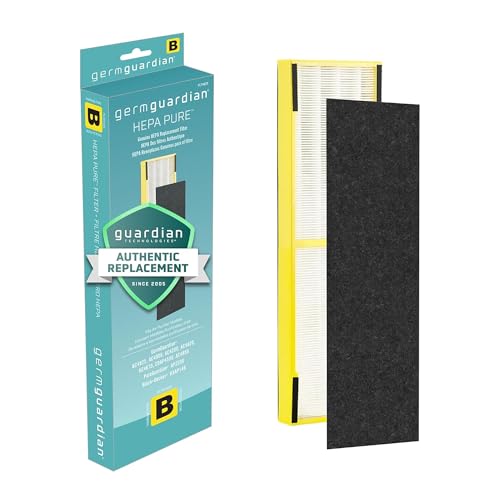
A true HEPA filter is dense, pleated paper or synthetic media folded into tight accordion pleats to maximize surface area within a compact housing. Held up to light, it looks like a fine paper fan, and pressing on it reveals stiff, closely spaced pleats that resist airflow noticeably, which is part of why HEPA filters need a real fan behind them to move air at a useful rate.
Activated carbon media looks and feels completely different: loose black granules or pellets, sometimes bonded into a mat or packed into a mesh pouch, with a texture closer to fine gravel or charcoal briquettes than paper. This is not a cosmetic difference; the pleated paper structure is what maximizes surface area for particle interception, while the granular structure is what maximizes surface area for gas adsorption, and neither structure does the other job well. A quick way to tell which stage dominates a combination filter is to look at how much of the cartridge is pleated paper versus loose granular material behind a mesh screen.
Two different jobs, not two versions of the same job
A HEPA filter is a mechanical trap. Air is pulled through a dense mesh of fibers, and solid or liquid particles, dust, pollen, mold spores, smoke, pet dander, get physically caught along the way. True HEPA media does this at 99.97 percent efficiency for particles at 0.3 microns, the hardest size for any filter to catch.
A carbon filter works on an entirely different physical principle: adsorption. Activated carbon is manufactured to be extremely porous, giving it enormous surface area relative to its size, and gas molecules stick to that surface as air passes over it. This is how it removes odors and volatile organic compounds, which are gases, not particles, and which pass straight through a HEPA mesh untouched because there is nothing solid for the fibers to catch.
A real example: two filters for the same unit
The Blue Pure 411 line sells two different replacement filter options that make this split concrete. The 411i Max Replacement Filter, at $29.46, is marked true HEPA on its listing with no carbon flag: it is built for particle removal. The Genuine AllergenBlock replacement, at $44.41, is marked with carbon but not true HEPA on its listing, and carries a stated 6 month life: it is built around a heavier carbon load for odor and gas removal rather than certified particle efficiency.
Buying the wrong one for your actual problem means paying for a capability you do not need. A smoker or pet owner dealing mostly with dander and dust gets more value from the particle-focused 411i Max filter. Someone dealing with persistent cooking odor or new-furniture off-gassing gets more value from the carbon-heavier AllergenBlock filter.
Why carbon mass, not the word carbon, is what matters
Many combination filters include a thin layer of carbon alongside a HEPA layer, and the listing is entitled to say the word carbon. The Blue Pure 411 basic filter, sold at $19.89, is one such example: it is flagged carbon but sits at a much lower price than the AllergenBlock filter, consistent with a lighter carbon layer bundled in rather than a dedicated gas-removal stage.
Activated carbon works by adsorption, a surface phenomenon, so the amount of surface area, meaning the physical mass of carbon in the filter, is what determines how much gas it can hold before it saturates. A thin carbon layer saturates quickly, sometimes within weeks under normal household VOC and odor loads, after which it stops removing anything even though it is still physically present in the filter. A filter built around a genuinely larger carbon mass, like a dedicated carbon canister or the heavier-loaded AllergenBlock design, lasts longer before that saturation point.
This is why two filters both truthfully labeled carbon can perform completely differently on an odor problem. The label tells you carbon is present. It does not tell you how much, and how much is the number that actually decides whether the carbon stage does anything noticeable in your specific room.
Why furnace filters almost never carry a carbon stage
Whole-house MERV-rated furnace filters, the kind sized to fit a return duct slot, are built to be mechanical particle filters first, and the vast majority carry no activated carbon layer at all, regardless of MERV rating. A MERV 13 furnace filter and a MERV 8 furnace filter are both judged on particle capture efficiency under ASHRAE 52.2, a test that has nothing to do with gas adsorption, so a higher MERV number tells you nothing about odor or VOC performance.
This is worth knowing before assuming a whole-house upgrade solves a smell problem: swapping to a higher MERV furnace filter improves particle capture across the ducted system, but it does essentially nothing for a lingering cooking odor or new-carpet smell, because the gas causing that smell passes through the same fiber mesh a HEPA-grade furnace filter uses for particles. A dedicated portable unit with a genuine carbon stage remains the more direct fix for a gas-phase odor problem even in a home with excellent whole-house particle filtration. Do not expect a MERV upgrade in the ductwork to touch a lingering smell problem at all, no matter how high the rating climbs.
How to tell when a carbon stage has stopped working
Unlike a HEPA filter, which shows its wear through reduced airflow as particles physically clog the fiber mesh, a saturated carbon filter often shows no visible or airflow-related sign at all. The filter can look and feel the same while it has completely stopped adsorbing new gas molecules, because saturation is a surface chemistry limit, not a physical blockage.
The most reliable signal is the return of the smell the filter was installed to address: cooking odor, pet smell, or a chemical off-gassing scent reappearing after weeks of improvement usually means the carbon stage has reached capacity, not that something else changed in the room. A dedicated VOC or air quality monitor showing rising readings despite an unchanged HEPA filter and fan setting is a more objective version of the same signal, and is worth checking before assuming the odor has a new source.
When you need both, and when you only need one
If your main complaints are dust, pollen, pet dander, or general particulate, a particle-focused true HEPA filter is doing the relevant job, and adding a heavy carbon stage adds cost without addressing your actual problem. If your main complaint is odor, cooking smell, or off-gassing from new furniture or paint, prioritize a filter with a genuinely substantial carbon mass rather than a filter that merely mentions carbon on the box.
Where both particulate and odor are real problems in the same room, look for a unit or filter combination that states both a true HEPA rating and a carbon mass or stage explicitly, rather than assuming a single all-purpose filter with a thin carbon layer will handle a serious odor problem the way a dedicated carbon stage would.
Equipment mentioned on this page
- Borgodf
Borgodf B-D02L/M05 Replacement Filter for MOOKA B-D02L & M05 Air Purifier
- HEPA claimed
- carbon stage
$17.98 Check pricePrices change often - Sinnya
12020 11020 HEPA Replacement Filter for Clorox Air Purifier 11020 & 11021
- HEPA claimed
$19.66 Check pricePrices change often - Cabiclean
Blue Pure Replacement Filter for Blueair 411, 411+, 411 Auto Air Purifier
- carbon stage
$19.89 Check pricePrices change often - Clorox
Clorox Tabletop Air Purifier True HEPA Replacement Filter, 200 Sq. Ft.
- HEPA claimed
$19.99 Check pricePrices change often - Rosekm
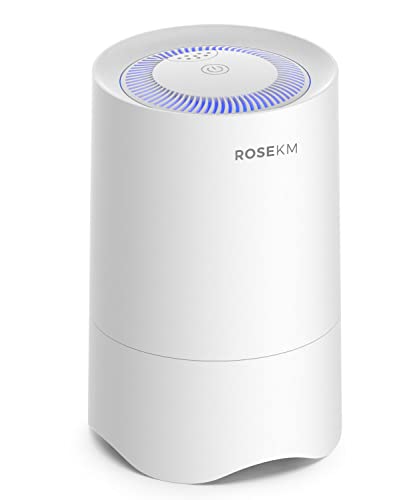
ROSEKM Small Air Purifier for Bedroom & Desk, 50 Sq Ft, H13 HEPA, White
- HEPA claimed
$19.99 Check pricePrices change often




Common questions
Can a HEPA filter remove odors on its own?
No. A HEPA filter traps solid and liquid particles through mechanical filtration and has no mechanism for adsorbing gas molecules, which is what odor and VOC compounds are. Odor removal requires an activated carbon stage working alongside, or instead of, the HEPA media.
Can a carbon filter remove dust or pollen?
Not effectively. Carbon works through adsorption of gas molecules onto its porous surface, which is a different mechanism than physically trapping solid particles. A dedicated carbon filter with no HEPA layer will let most dust and pollen pass through largely untouched.
How do I know if a carbon filter has enough carbon to matter?
Price and stated purpose are the two practical signals: a filter marketed specifically for odor or VOC removal, at a price noticeably higher than a basic combination filter for the same unit, typically carries more carbon mass. A listing that mentions carbon only in passing alongside a basic HEPA claim usually carries a lighter, faster-saturating layer.
Does a carbon filter wear out even if it still looks fine?
Yes. Activated carbon saturates as its surface area fills with adsorbed gas molecules, and a saturated filter stops removing odor even though it still looks physically intact and is still installed correctly. Odor returning after weeks or months of good performance is a sign the carbon stage has reached its capacity.
Is it worth buying a purifier with both a strong HEPA filter and a strong carbon filter?
If you have both particulate concerns like dust or pet dander and gas-phase concerns like cooking odor or VOCs, yes. Look for a listing that explicitly states both a true HEPA rating and a substantial dedicated carbon stage, rather than assuming a single thin combination filter covers both jobs equally well.